CNC Turning vs CNC Milling: Which is Best For Your Project?
One of the biggest questions in engineering is which is the better option, CNC milling vs CNC turning?
CNC turning and CNC milling are two of the most widely used machining processes for manufacturing precision components. While both rely on computer-controlled equipment to deliver accurate and consistent results, they differ in how material is removed and the types of parts they produce. Choosing the right process can affect cost, lead time, design complexity and overall efficiency.
This guide compares CNC turning and CNC milling, explaining their differences, advantages, applications and key considerations to help you determine the best option for your project.
CNC Turning Overview
CNC turning is a subtractive machining process where a cutting tool removes material from a rotating workpiece to create cylindrical or round components. The part is held in a chuck and spun at high speed while a stationary cutting tool shapes its outer diameter, inner bore or end features.
It is a highly effective for producing precise, symmetrical parts with excellent surface finishes and tight tolerances, particularly in high-volume production environments.
Benefits of CNC Turning
CNC turning is an ideal choice for various applications seeking benefits like, fast production times, high levels of repeatability and excellent accuracy for round or tubular components. It is also a cost-effective option with minimal material waste due to precise cutting. Then there is the addition of automation which lowers the opportunity for human error.
CNC Turning Applications
CNC turning is commonly used to manufacture shafts, bushings, pins, bolts and other cylindrical components found in automotive, aerospace and industrial machinery. It is especially valuable in applications where symmetry and precision are critical like within hydraulic systems, engine components and certain rotating mechanical parts.
CNC Milling Overview
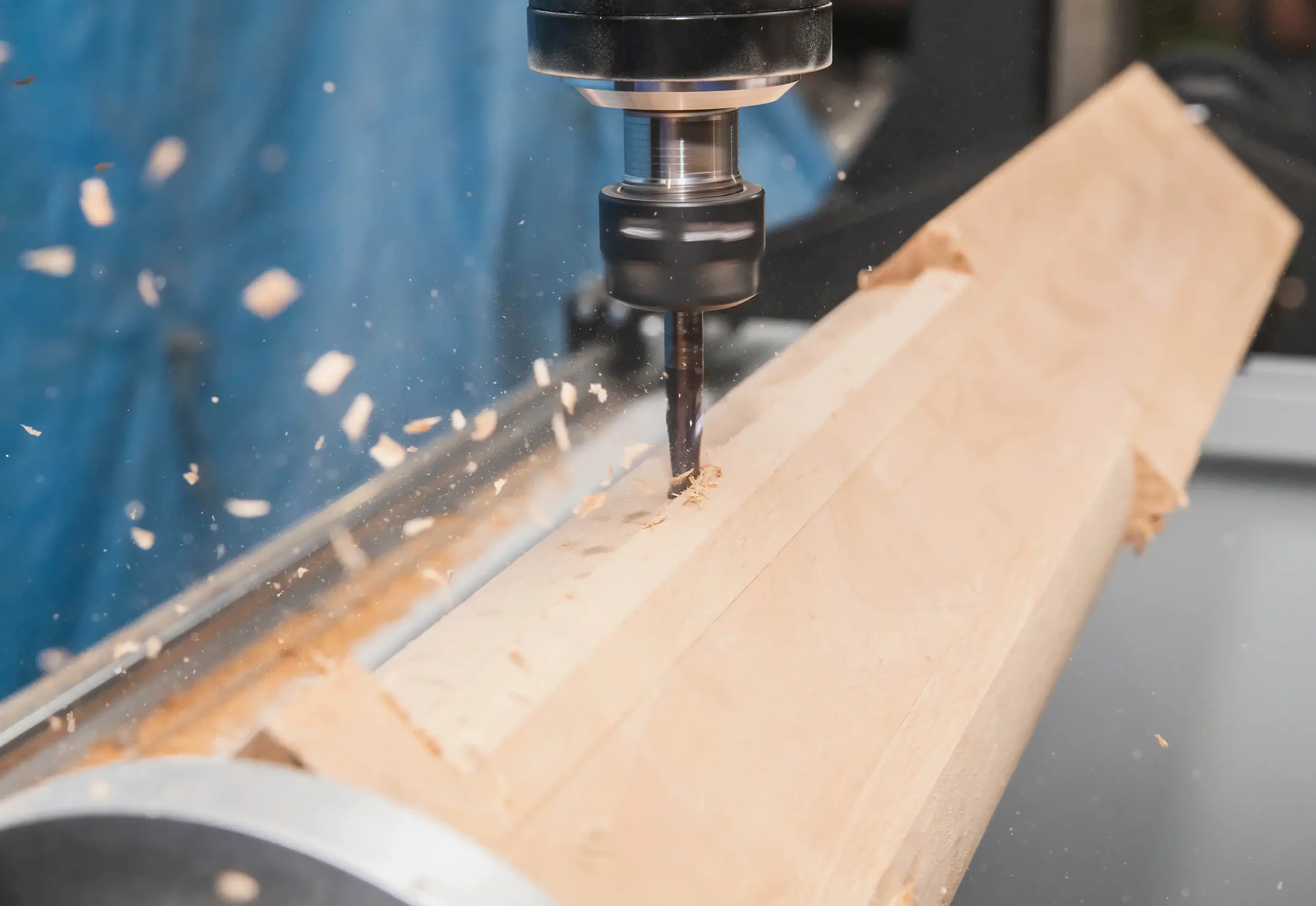
CNC milling, on the other hand, is a machining process where a rotating cutting tool removes material from a stationary workpiece to create complex shapes, slots, holes and detailed features. Unlike turning, milling is not limited to cylindrical parts and is better suited for components with intricate geometries, flat surfaces and multi-axis features.
When looking at CNC milling vs CNC turning, milling is a highly versatile option that allows for the production of both simple and highly complex parts with excellent accuracy and surface finish. Milling is widely used for prototyping, custom components and parts requiring detailed or non-rotational designs.
Key Difference Between CNC Turning and Milling
Machine Setup and Operation
CNC turning works by rotating the workpiece while the cutting tool remains mostly stationary, which is ideal for cylindrical parts.
CNC milling works by rotating the cutting tool while the piece that is being worked on stays fixed. This allows for multi-directional cutting and shaping.
Part Shape and Design Capabilities
Turning is best suited for round, symmetrical components like shafts and tubes.
But milling allows for highly detailed, irregular and multi-faced parts, making it more versatile for complex geometries or custom designs.
Precision and Tolerances
On the whole, both processes achieve tight tolerances, but CNC turning often provides more consistent accuracy on round parts.
CNC milling maintains high precision across complex shapes, though accuracy can depend on machine axis control and setup.
Production Speed
Between the two, CNC turning is generally the faster option for producing relatively simple cylindrical parts in larger production runs.
CNC milling tends to take a little longer due to the multi-axes movement it can achieve and thus implement into detailing or complex shapes.
Surface Finish Quality
Turning typically delivers smoother finishes on round surfaces straight from the machine.
Milling can also achieve excellent finishes, but may require additional passes or post-processing for highly detailed or textured features.
Material Compatibility
Materials aren’t really a factor with CNC milling vs CNC turning as both processes work with metals, plastics and composite materials.
Complexity of Parts
Complexity is arguably the biggest difference between the two.
Turning is limited to simpler, rotational designs, while milling excels in producing complex, multi-feature parts with slots, pockets and intricate contours that cannot be achieved through turning alone.
Cost and Production Efficiency
CNC turning is a more cost-effective process when looking at high-volume production runs of simple parts.
CNC milling is a more expensive option, both in timing and investment, but can open the doors to creating more expensive, complex components.
When Should You Use CNC Turning Over Milling?
CNC turning is the proven and most ideal choice if your projects involve round, symmetrical or cylindrical parts. It is typically the preferred choice for shafts, pins, bushings and other components where highly precise, consistent, smooth diameters are needed.
CNC milling is the more suitable choice for parts and components with complex shaping, flat surfaces or other detailed features that can’t be created through traditional, rotational machining.
Turning is the more efficient and cost-effective choice for rotational, medium to high production volumes of parts, for anything else, milling is often the better choice.
Considerations For Choosing Between the Two Processes
Lead times: Turning can reduce machining timelines for the more simple components
Material type: Both processes can actually use work with the same kind of metals and plastics
Production volume: Turning is more efficient for high-volume runs of simple components whereas milling is more refined for smaller complex runs
Geometry: Turning is the better choice for round and symmetrical parts while milling is better for complex, multi-surface designs
Cost efficiency: Depending on the complexity of the job, each technique can be more cost effective
Get in Touch With Cut to Size
Looking for reliable, high quality CNC machining? Then let the experts at Cut to Size become part of your supply chain and deliver precision-machined components that have been tailored to your exact requirements. With our consistent focus on quality, accuracy and efficiency, our CNC turning capabilities can elevate your project.
Whether you are in the market for a one-off prototype or are ready to kickstart a full production run, our solutions can be tailored to whatever you need. Contact the team at Cut to Size to discuss your project requirements, learn more about CNC milling vs CNC turning or to get a bespoke quote for your turning needs today. Call 01527 352306 or email info@cuttosize.co.
Related Posts