Guide to Wood CNC Machining
CNC wood machining has upgraded and transformed the way that wooden components can be designed and manufactured. Incorporating that technology has enhanced the precision, efficiency and consistency of the whole process.
Our experts have compiled this guide on wood CNC machining, how the process works and the various different methods and materials that can be used.
Wood CNC Machining Explained
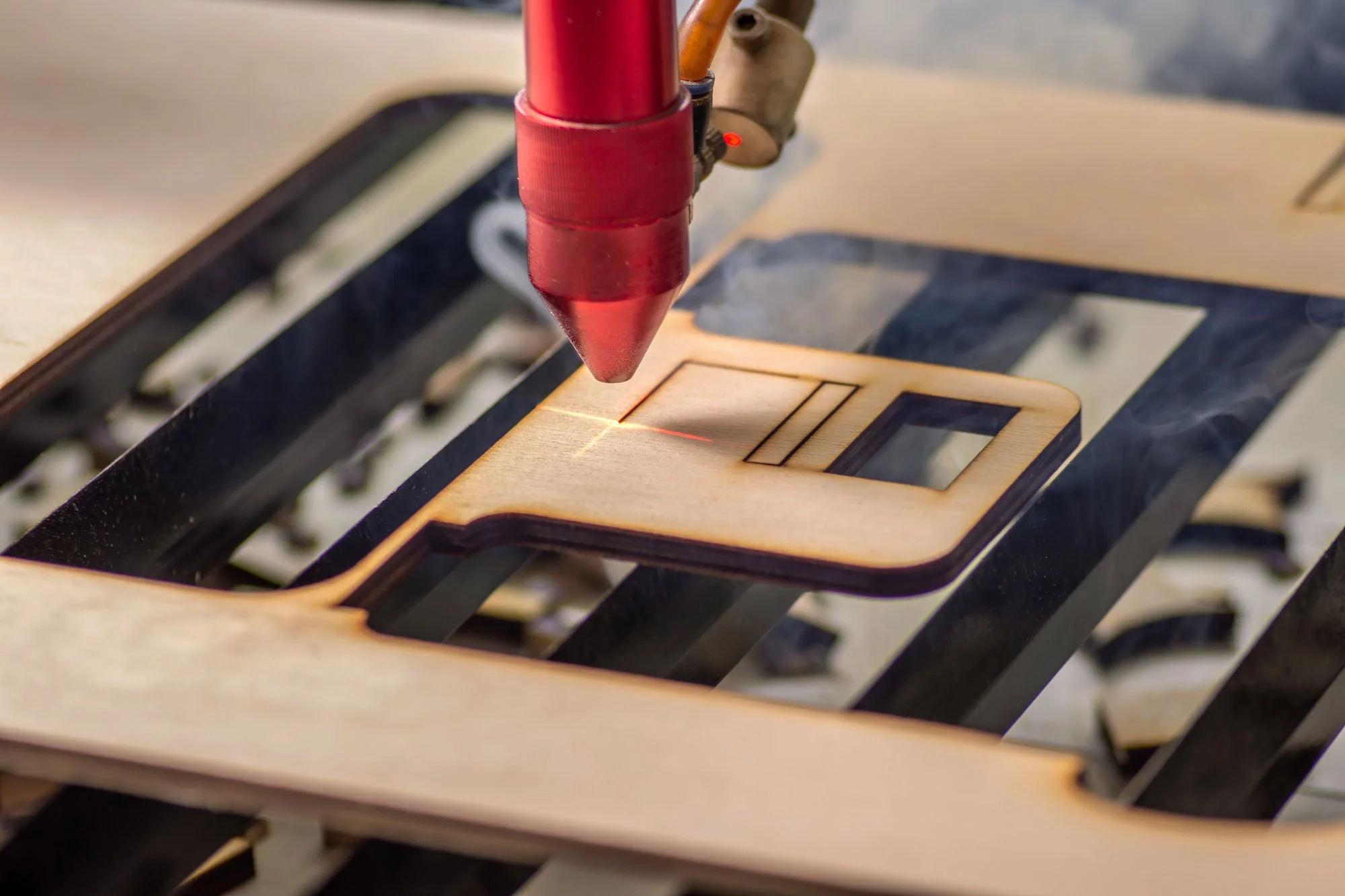
CNC wood machining is a manufacturing process controlled by advanced computer systems that can carve, drill, cut and shape wood with impeccable accuracy. By using pre-programmed designs it is ideal for creating intricate designs and custom components consistently along a large production run.
How Wood CNC Machining Works
Wood CNC machining begins with a digital CAD design, which is converted into machine instructions (G-code) using CAM software. These instructions guide the CNC machine's cutting tools along precise paths to remove material from the workpiece. Throughout the process, automated movements ensure accurate dimensions, clean finishes and consistent results across every manufactured component.
Types of Wood CNC Processes
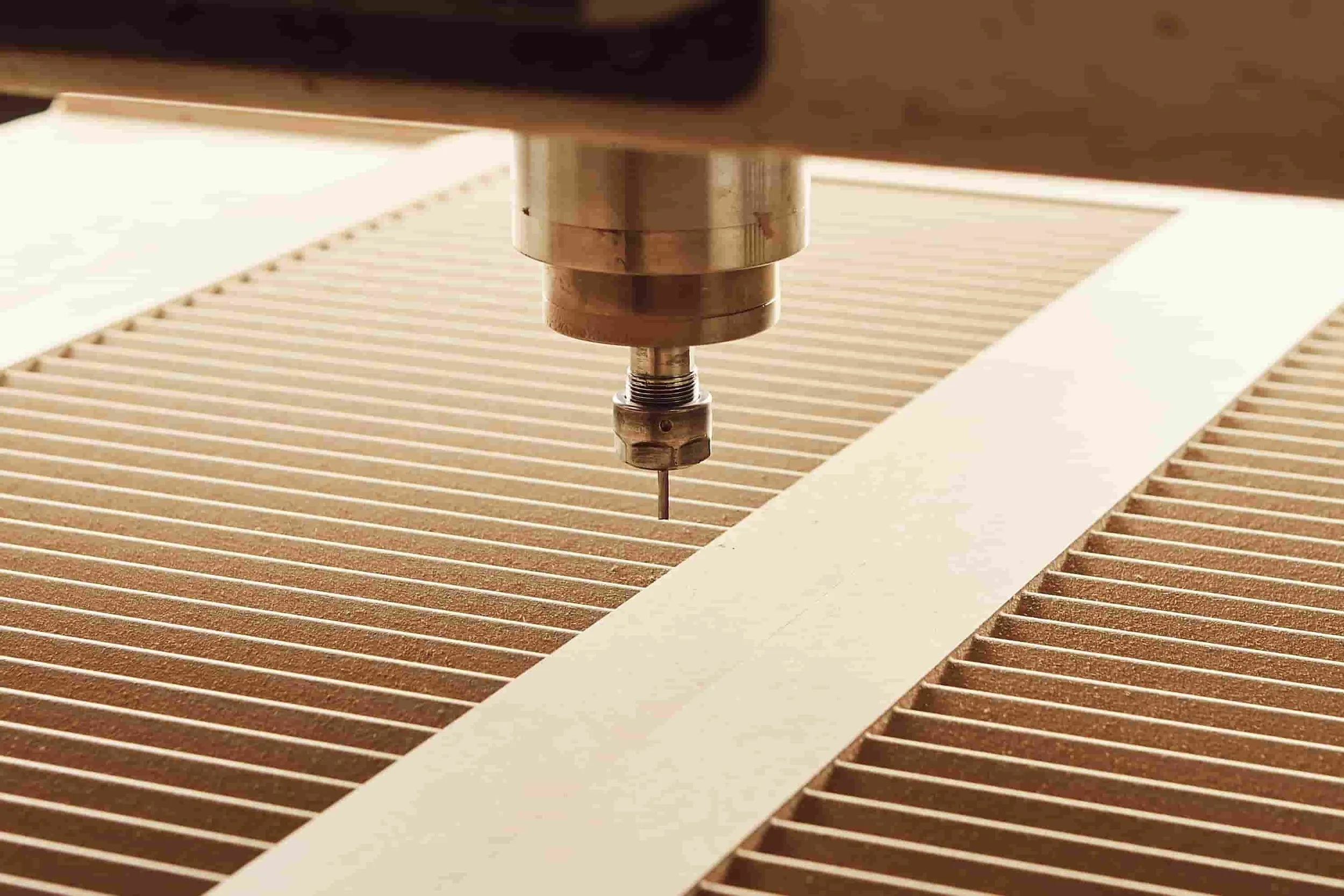
There are many CNC processes that can be applied to wood manufacturing operations. There is CNC routing that is ideal for cutting, carving and engraving. CNC milling can create detailed shapes and complex profiles, then there is CNC drilling which is crucial for accurate holes. Finally, there is CNC turning which is great for spindle and decorative components and acts as a computer-controlled lathe.
Benefits of CNC Woodworking for Businesses
Precision and Repeatability
CNC wood machining delivers impressively accurate, repeatable results across both small and large production runs. This precision ensures that components have minimal errors and superior quality.
Faster Production Cycles
Automated machining speeds up manufacturing by reducing manual intervention, allowing businesses to complete projects faster, increase output and meet demanding customer deadlines consistently.
Cost Efficiency at Scale
CNC machining lowers labour costs and improves production efficiency, making large manufacturing runs more economical while maintaining consistent quality across every finished component.
Design Flexibility
Complex patterns, intricate carvings and bespoke designs can be produced with ease, giving businesses greater creative freedom without sacrificing precision or production efficiency.
Reduced Material Waste
Accurate cutting paths maximise material usage, reducing offcuts and unnecessary waste. This lowers production costs while supporting more sustainable and environmentally responsible manufacturing practices.
Wood Materials That Can be Used in CNC Machining
When looking into wood CNC machining, there is a variety of materials that can be used depending on machine capabilities.
MDF - Ideal for signage, furniture, cabinetry and can be painted for a smoother finish
Plywood - Strong and versatile and typically used for furniture, structural components and interior fit-outt
Softwoods - Pine, cedar, spruce or others can be used as lightweight, cost-effective materials for woodworking
Hardwoods - Oak, maple, ash, walnut, beech or others offer a superior, durable and natural finish
Chipboard - An economical option used for furniture panels and other components on a budget
Bamboo - A strong and sustainable alternative
Strand Boards - Strong option for structural or construction needs
Solid Timber - Typically used for bespoke, architectural and decorative options
Industries That Use CNC Wood Machining
Furniture Manifacturing
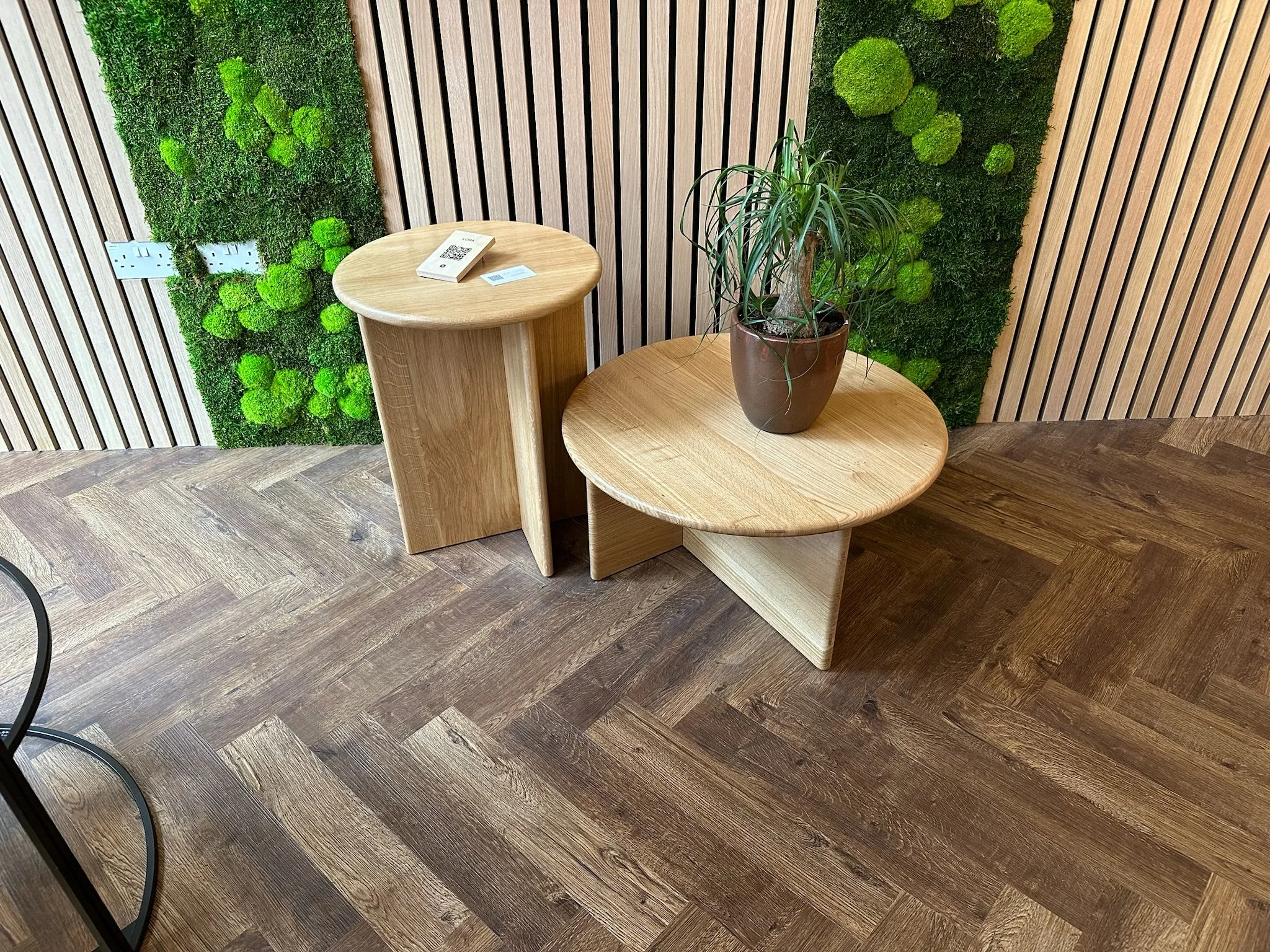
Furniture manufacturers use CNC wood machining to produce accurately cut panels, decorative features, tabletops, shelving and bespoke furniture components. The process ensures consistent quality, faster production, reduced waste and the ability to create complex, repeatable designs efficiently.
Retail Displays and Fixtures
Retail environments benefit from CNC machining when producing bespoke display stands, shelving, point-of-sale units, branded displays and exhibition fixtures. Precision cutting enables creative, eye-catching designs while maintaining consistency across multiple stores or nationwide retail rollouts.
Cabinet Manufacturing
Cabinet manufacturers rely on CNC machining to accurately cut panels, drill fixing holes, machine joints and produce custom cabinetry. Automated production improves assembly accuracy, shortens lead times, reduces material waste and delivers consistently high-quality finished products.
Interior Design
Interior designers use CNC machining to create bespoke wall panelling, decorative screens, reception desks, acoustic panels, feature walls, custom furniture and architectural details. Precision machining transforms creative concepts into high-quality installations with exceptional consistency and finish.
Commercial Areas
Commercial projects regularly utilise CNC woodworking for office fit-outs, hospitality interiors, branded signage, exhibition stands, promotional installations, architectural features and bespoke artwork.
Design Guidelines for CNC Wood Parts
Successful CNC wood projects begin with thoughtful design. Consider things like grain direction for appearance and strength, allow suitable machining tolerances, avoid unnecessarily small features, choose the right material thickness and design components that balance functionality, durability, manufacturability and visual appeal.
Surface Finishing Options
Machining is not the final part of the process in CNC wood machining. Your created components can have further finishing options to suit their intended applications. These can include sanding, painting, staining, varnishing and oiling.
Traditional Woodworking vs Wood CNC Machining
Accuracy
Traditional woodworking methods rely on manual craftsmanship that takes time to learn, perfect and complete. CNC wood machining on the other hand delivers exceptional precision through computer-controlled movement. This produces highly accurate, repeatable components with consistent dimensions.
Production Speed
Manual woodworking often requires significantly more time for measuring, cutting and finishing. CNC machining automates these processes, dramatically increasing production speed while maintaining quality, allowing businesses to complete projects and large production runs more efficiently.
Labour Requirements
Traditional woodworking requires skilled labour throughout much of the manufacturing process. CNC machining reduces manual intervention by automating repetitive tasks, enabling operators to oversee production while improving efficiency and reducing labour requirements for larger projects.
Scalability
Scaling traditional woodworking can require additional labour and production time. CNC machining allows businesses to increase output with minimal changes to the manufacturing process, making it suitable for everything from one-off prototypes to high-volume production.
Costs
Traditional woodworking may be cost-effective for certain handcrafted projects, while CNC machining offers greater long-term value for repeat production. Reduced labour, faster manufacturing, consistent quality and lower material waste help improve overall cost efficiency.
Get Expert Help With Cut to Size
Regardless of whether you are looking to form a single prototype or starting a high-volume production, here at Cut to Size, our expert engineers deliver precise CNC wood machining that has been tailored to your requirements. From initial design support to selecting the right materials to manufacturing processes and finishing options, we can help make your project a reality.
Get in touch today to discuss your specifications, request a quote or to learn more about how our wood CNC machining capabilities can support your projects.
Frequently Asked Questions
-
The ideal solution for your upcoming projects will all depend on its specific requirements. Two of the more common options are CNC routers for carving, cutting, engraving and making profiles in sheet materials and CNC milling and drilling for precise bore creation.
-
Most CNC projects begin with CAD files such as DXF, DWG, STEP or other compatible design formats. If your design is still in development, the Cut to Size team can help prepare, optimise and refine files for efficient CNC machining.
-
CNC wood machining is suitable for projects of almost any size. Whether you require a one-off prototype, a small production batch or large-scale manufacturing, CNC technology provides consistent quality and repeatable results throughout the production process.
-
Just as with choosing the right CNC wood machining process, deciding on the right material all depends on the specific requirements that your project has. Things like budget, intended applications, required strength, durability and overall appearance all need to be considered first.
-
Look for a CNC machining partner with proven experience, high-quality equipment, design support, reliable lead times, material expertise and strong quality control processes. A supplier that can support projects from concept through to finished production provides added value and confidence.
Related Posts