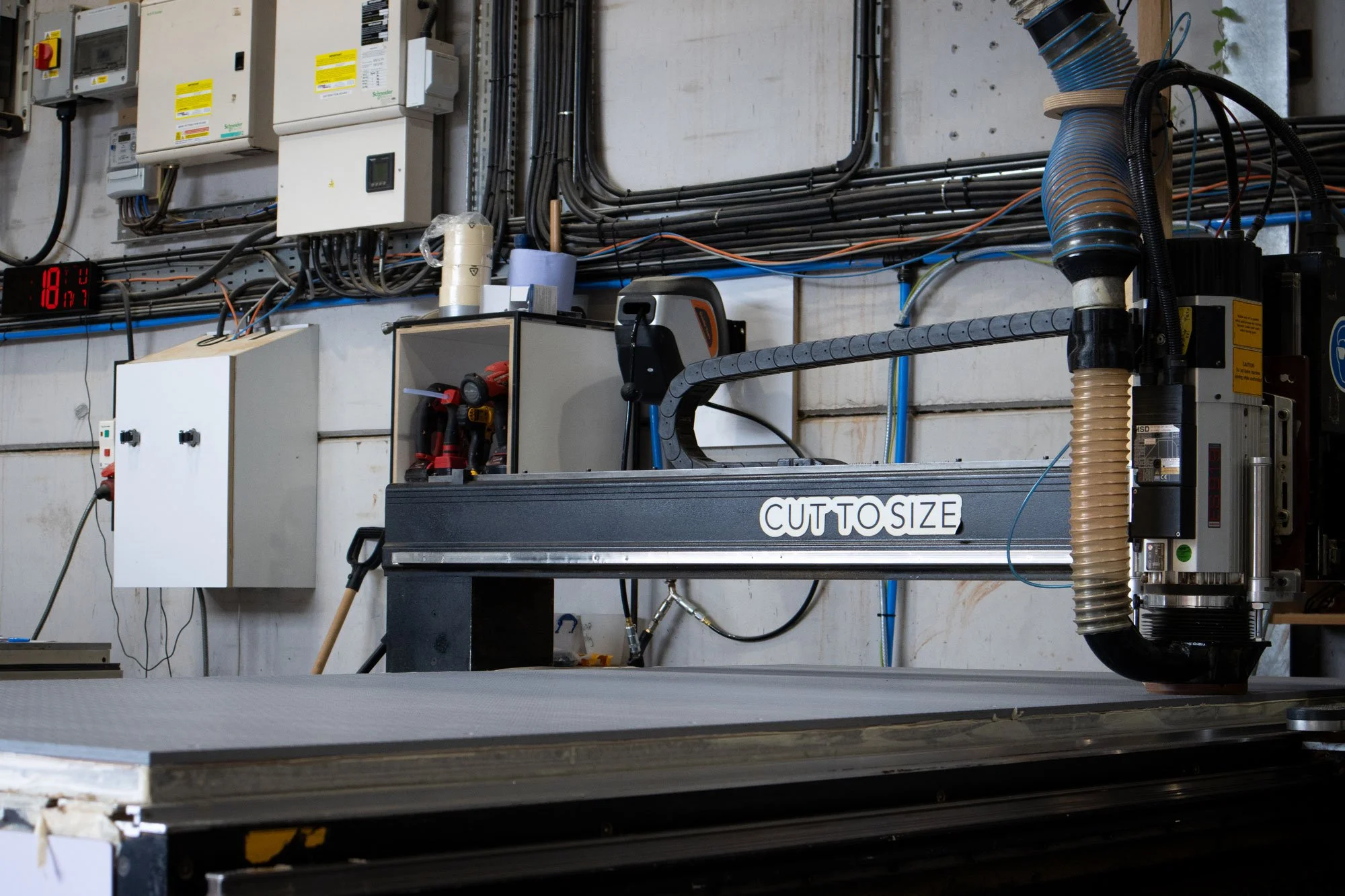
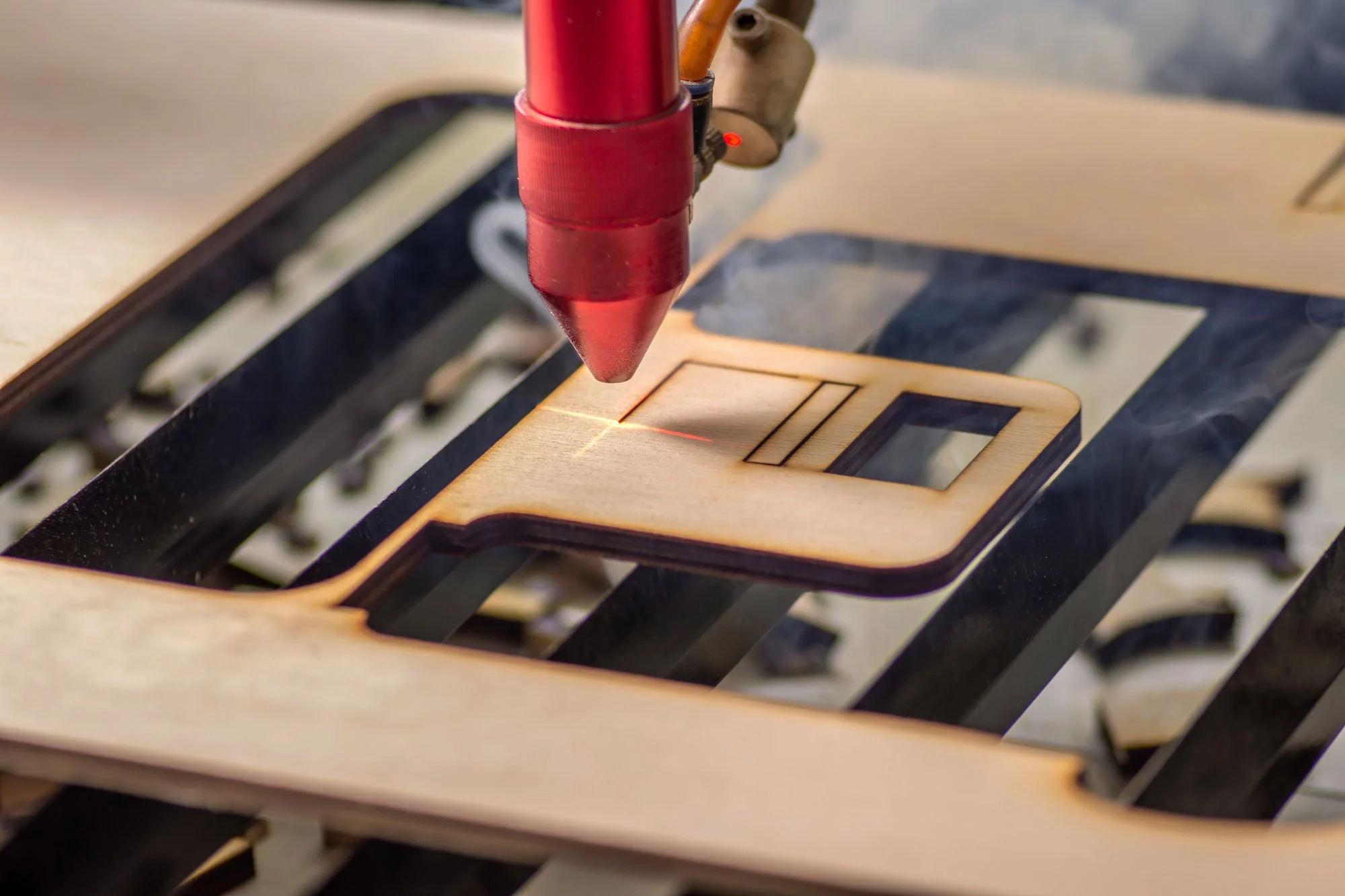
Laser CNC cutting uses a focused beam to remove material along a path controlled by programmed instructions. Put simply, the laser does the cutting and the CNC system tells it where to move. Those instructions come from a digital design, allowing the machine to follow the specified dimensions and geometry.
Before cutting starts, the design must be prepared, the material assessed and the machine set up for the job. This guide explains each stage of the CNC cutting process, along with the role of CNC control and the types of work laser cutting can support.
What Is CNC Laser Cutting?
CNC stands for Computer Numerical Control. It refers to machinery controlled by programmed instructions rather than every movement being guided manually.
In CNC laser cutting, the instructions determine the path followed by the beam or workpiece. The laser itself provides the cutting action, concentrating energy onto a small area of material so it can be removed.
These two functions are separate. CNC controls the movement, while the laser is the tool used to make the cut. Other CNC machining processes may use routers or drills instead.
CNC cutting does not, therefore, always mean laser cutting. Laser cutting is one of several computer-controlled manufacturing methods, each suited to different materials and component requirements.
How Does the CNC Laser Cutting Process Work?
A laser may complete the cutting operation quickly, but preparation has a major influence on the result. The design, material and machine settings all need to work together.
1. Creating the Digital Design
The process begins with a digital drawing of the required component. This might be a simple outside profile or a panel containing several detailed cut-outs.
CAD files are commonly used because they define the dimensions and geometry the machine needs to follow. Internal features must be shown accurately. If a measurement is missing or a line is in the wrong position, the machine will not correct it automatically.
The drawing also needs to reflect how the component will be manufactured. A feature that works well in one material or thickness may need to be adjusted for another.
2. Preparing the Cutting Instructions
The design is then converted into instructions that the machine can read. These instructions set the cutting paths and establish the order in which they will be completed.
This stage may also account for the width of material removed by the laser, known as the kerf. Without this adjustment, the finished component may not match the required dimensions.
The operator selects suitable settings for the material and its thickness. A production-ready drawing is important, but it still needs to be checked and prepared before it is sent to the machine.
3. Positioning the Material
The material is placed within the machine and aligned for cutting. It must remain stable while the programmed operation takes place.
Setup varies according to the sheet size, material, thickness and design. Surface condition may also matter, particularly if one face will remain visible when the component is finished.
Where a sheet contains several parts, their position can be planned to make sensible use of the available material. That arrangement may also need to account for grain direction, visible faces and the space required between individual cuts.
4. Focussing the Laser
The laser is directed through the cutting head and focused onto a concentrated point. Energy at that point heats the material until it melts or vaporises, depending on what is being cut and the type of equipment in use.
Some laser cutting systems use an assist gas to clear molten material and debris from the cutting area. The exact process differs between materials and machines.
Beam focus and cutting speed must be appropriate for the workpiece. Incorrect settings may leave an inconsistent edge or prevent the laser from cutting through the material properly.
5. Following the Programmed Cutting Path
Once the machine is running, the CNC system controls the movement of the cutting head, the material or both. The laser follows the prepared path rather than being steered by hand.
This path may include straight lines, curves, lettering and internal openings. When a component contains several features, the sequence is planned so the material stays stable for as long as possible. Internal details will often be cut before the outer profile releases the part from the surrounding sheet.
The same instructions can be used again for repeat work. There is no need to mark out and interpret the design separately for each component.
6. Checking the Finished Component
After cutting, the finished part is checked against the agreed drawing and specification. Dimensions, profile geometry and edge condition may all need to be reviewed.
A prototype check can reveal whether the design or machine setup needs changing before a larger quantity is produced. This is more useful than discovering the same issue after an entire batch has been completed.
Quality checks form part of Cut to Size’s wider production process. Approved components can then move into further manufacturing, finishing, assembly or preparation for delivery.
What Role Does CNC Play in Laser Cutting?
The laser supplies the energy needed to cut, but CNC control determines how it travels across the material.
Programmed instructions allow the machine to reproduce the paths set out in the digital file. They can control straight lines, curves, repeated openings and detailed profiles without an operator manually guiding the cutting head.
This is particularly valuable when several matching parts are required. Once the file and setup have been approved, the same design can be reproduced across the order with less variation than manually marked and guided cutting.
CNC also makes revisions easier to manage. If a dimension or feature changes, the digital design and cutting instructions can be updated before the next part is made.
Skilled input is still required. The drawing must be reviewed, the material checked and the machine prepared correctly. CNC controls the movement, but it does not replace the manufacturing decisions made before production begins.
What Materials Can CNC Laser Cutting Be Used For?
The materials a laser can cut depend on the type of equipment, its power and how it has been configured. Not every laser is suitable for every material.
Industrial laser systems are used with metals, woods, certain plastics, fabrics, paper-based products and selected composites. Compatibility varies considerably between machines, even within these broad material groups.
Cut to Size offers laser cutting and engraving for woods, lightweight plastics and composite materials where the specification is suitable. Each material still needs to be assessed before production.
Material properties and thickness influence the cutting speed and finished edge. They also affect the level of detail that can be produced reliably and whether additional finishing may be required.
Some plastics should not be laser cut because of the way they respond to heat or the fumes they release. The precise material grade must be confirmed rather than relying on a general description such as “plastic sheet”.
What Can CNC Laser Cutting Be Used to Make?
Laser cutting is well suited to components that include detailed profiles, lettering, internal openings or decorative patterns.
For signage projects, it may be used to produce letters, logos and shaped panels. Furniture and interior work can include screens, decorative inserts, lightweight panels and other design details.
Retail and fit-out contractors may require branded features, display parts or components made around the dimensions of a particular space. Laser cutting can also support prototypes, giving designers a physical version to review before they approve further production.
Once a design has been finalised, the same file can be used to create matching parts for furniture ranges, display systems or multi-site fit-outs.
Laser cutting will not be right for every component. Thicker parts, recessed features and deep grooves may be better suited to routing or another CNC process.
How Accurate Is CNC Laser Cutting?
CNC laser cutting is suited to detailed work because it combines a concentrated beam with a digitally controlled cutting path. The machine follows the geometry in the prepared file, which helps it reproduce the intended profile.
The same instructions can also be reused for matching parts. This provides greater consistency than setting out each component separately by hand.
There is no universal laser-cutting tolerance. Accuracy depends on the machine, material, thickness, beam focus and production setup. Heat may also affect the edge or behaviour of certain materials.
Required tolerances should be discussed before the job is approved. The manufacturer can then assess whether laser cutting is suitable or recommend another method.
CNC Laser Cutting vs Other CNC Cutting Methods
Laser cutting uses a focused beam rather than a physical cutting tool. A CNC router, by comparison, removes material using a rotating cutter. Other CNC machines may use drills or saws.
The difference affects what each process can achieve. Laser cutting is often chosen for detailed through-cuts and engraving on compatible materials. Routing can create outside profiles as well as grooves, pockets, recesses and holes at specified depths.
The resulting edges are different too. Wood cut with a laser may show heat marking, while a routed edge has the appearance of a mechanical cut. Routers also need space for the diameter of the cutting tool, which can limit very fine details and influence the shape of internal corners.
Neither process is the best choice in every situation. Material, thickness, geometry and finish should determine which one is used.
What Are the Advantages of CNC Laser Cutting?
For suitable materials and designs, the practical advantages include:
Following detailed cutting paths taken from digital files
Producing curves and complex profiles
Repeating an approved design across multiple components
Reducing variation associated with manually guided cutting
Updating dimensions and features through the design file
Cutting without a physical tool becoming blunt through contact with the material
The finished result still depends on the equipment, settings and workpiece. Benefits such as edge quality and cutting speed should always be considered in relation to the actual project.
Choosing the Right CNC Cutting Method for Your Project
The fact that a material can be laser cut does not necessarily mean a laser is the right choice for the job.
Material type and thickness are the starting points. The manufacturer will also need to consider the component dimensions, geometry, edge finish, quantity and required tolerances.
A thin part with detailed through-cuts may suit laser cutting. A thicker furniture panel that needs grooves, recessed fixing points or controlled-depth machining is more likely to require CNC routing. Some projects use different processes for separate components.
Supplying drawings or CAD files gives the manufacturing team a clear basis for assessing the job. Details about material, quantity, finish and how the component will be used are also helpful when choosing the method.
CNC Cutting With Cut to Size
Cut to Size supports projects from the first review of your drawings through to programming, preparation, cutting and final quality checks.
Our CNC cutting capabilities are used for furniture, cabinetry, signage, retail fit-outs, prototypes and custom components. After reviewing the design and material, we can advise whether laser cutting, routing or another CNC process is appropriate.
We work on one-off components, prototypes and repeat production requirements. Engraving, edgebanding, finishing and assembly can also be included where the project needs further work after cutting.
Send us your drawings, CAD files or initial project details to discuss the best way to manufacture your components. Call 01527 352306, email info@cuttosize.co or get in touch online.
Related Posts