CNC machining has given furniture designers far more freedom to explore shapes and construction methods that would be difficult to achieve consistently by hand. It also gives manufacturers a practical route from an approved design to a repeatable set of production components.
That flexibility is useful at both ends of the market. A designer may need a single statement piece for a particular interior, while a furniture manufacturer might require the same panels, joints and fixing points across an entire product range.
Good CNC furniture design brings the creative and manufacturing sides of a project together. The finished piece still needs to look right, but it must also be practical to machine and reproduce.
How CNC Machining Is Used in Furniture Design
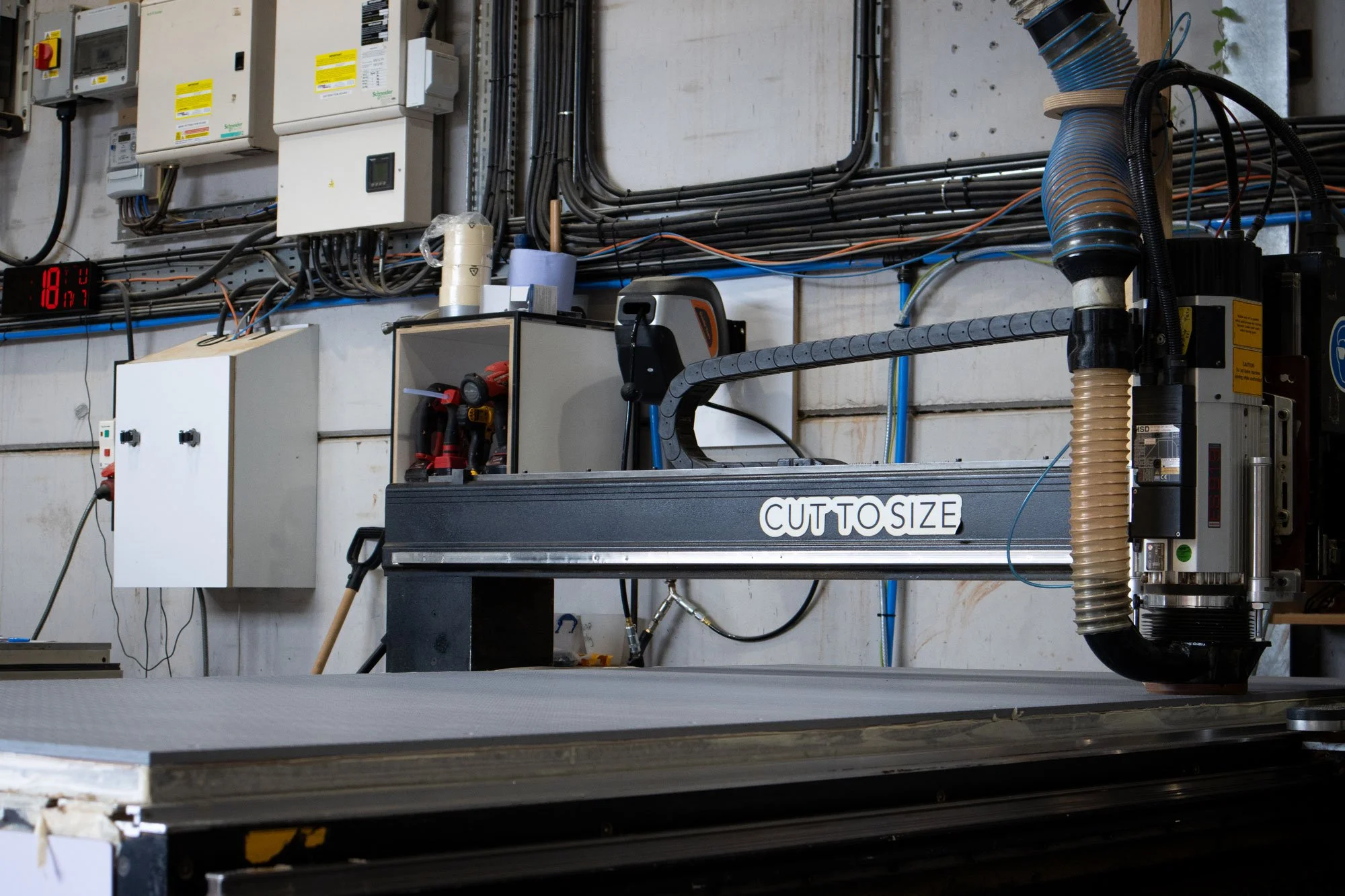
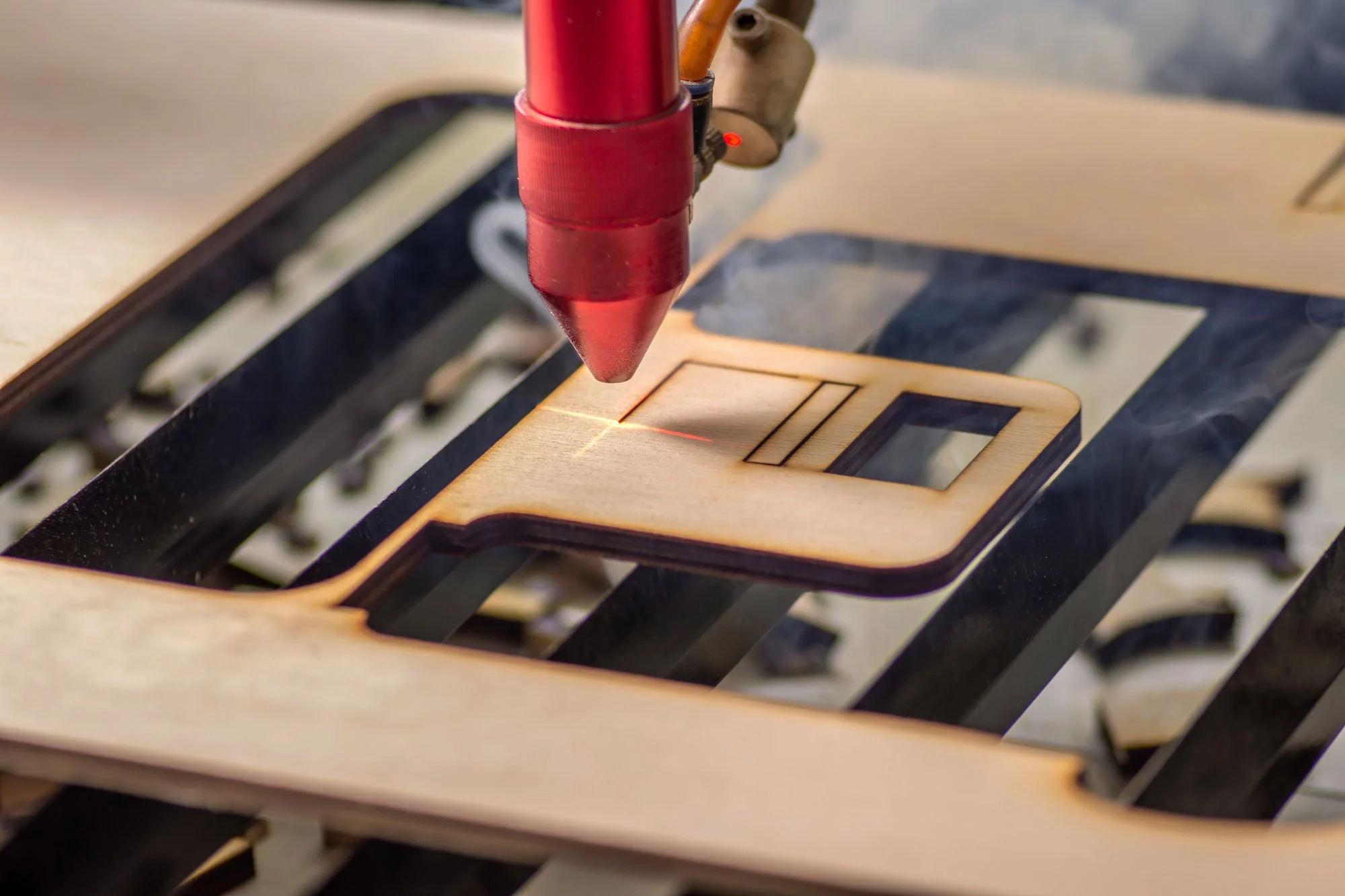
CNC machining usually sits between the design stage and assembly. Once the drawings have been checked and prepared, the machine follows the programmed toolpaths to create each component. For panel-based furniture, this may involve cutting cabinet sides, doors, shelves, table tops and structural parts from sheet material. Holes for fixings, hinge positions, grooves, channels and recessed details can be machined during the same production stage. CNC routing is also used for curved profiles, decorative patterns and edge details. Where a design includes several identical parts, the same approved file can be used throughout the order. That consistency matters when joints have to align or components are being assembled away from the manufacturing facility. Cut to Size provides CNC machining, routing, cutting and profiling for furniture projects. Work can begin with an established CAD file or a design that still needs some preparation before it is ready for production.
CNC Furniture Ideas and Applications
The most useful CNC furniture ideas tend to make good use of the process rather than adding complexity for its own sake. Accurate joints, well-planned cut-outs and repeated forms can all become part of the design as well as the construction.
CNC-Cut Tables and Desks
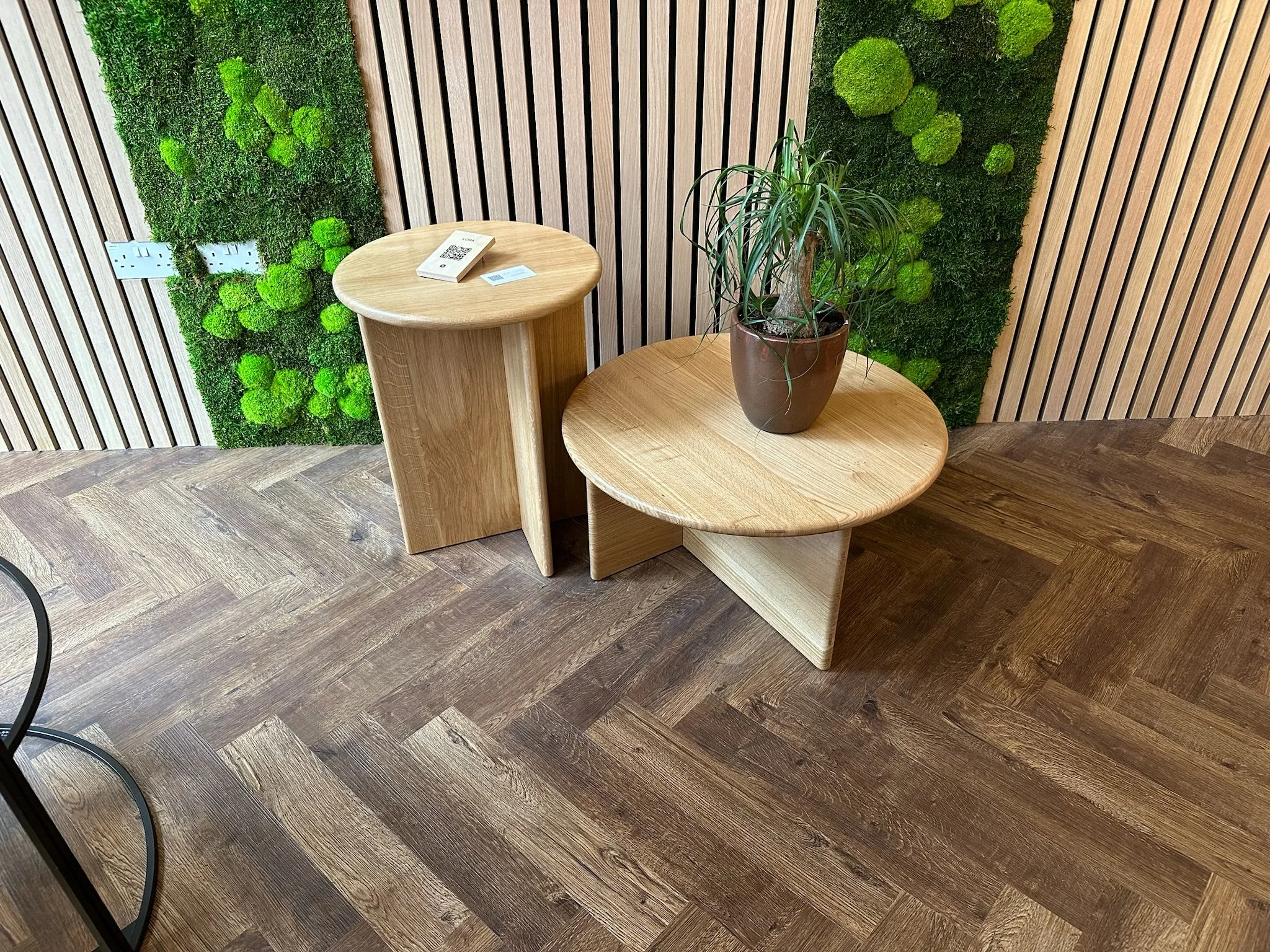
Table tops and desk components are natural candidates for CNC machining. The top can follow a standard rectangular format or take on a curved, tapered or asymmetric profile to suit the room and intended use. Cable ports and channels for wiring can be positioned within the design file. This is particularly useful for office desks and meeting tables where loose cables would detract from the finished installation. CNC machining also allows the same fixing pattern to be repeated across several desks. Legs and other supporting parts can be produced to matching dimensions, while turned timber elements may be manufactured using CNC wood turning where the design calls for them.
Shelving and Storage Systems
A storage unit rarely consists of cut panels alone. Shelves, sides, doors and dividers must line up, while hinges, connectors and fittings need to sit in the correct positions. These details can be included at the machining stage. Slots and interlocking joints may also be used to simplify assembly or create furniture with fewer visible fixings. For fitted storage, components can be designed around alcoves, sloping ceilings and other awkward areas. Modular shelving takes a different approach, using repeatable parts that can be arranged in several configurations without changing the core manufacturing method.
Seating and Benches
CNC machining supports seating designs built from layered profiles, shaped panels or repeated frame components. It can be used to produce chair sides, seat bases, back panels, bench parts and internal supports. Curves that would require extensive setting out by hand can be reproduced directly from the approved drawing. Once the first version has been tested, the same component geometry can be carried across the rest of the order. The process is also well suited to flat-pack and slot-together seating. These designs rely on the joints being properly considered, as even a small change in material thickness can affect how securely the finished piece fits together.
Retail and Commercial Furniture
Commercial furniture often has to work within an existing floor plan, brand scheme or installation programme. Reception desks, retail displays, office storage, exhibition furniture and hospitality pieces may all require non-standard dimensions. For a single site, CNC machining provides the freedom to manufacture around the available space. For a rollout involving several premises, it offers a controlled way to reproduce the approved components. A retailer, for example, may need matching display units for a number of stores. The overall design remains consistent, but individual parts can still be adjusted where one location has different dimensions. Components may also be labelled and packed in sets to make installation easier.
Decorative and Statement Furniture
Not every machined detail needs to serve a structural purpose. CNC routing can introduce patterned panels, geometric cut-outs, shallow reliefs and textured surfaces that give a piece its identity. Branding can be incorporated into reception furniture or display units, while screens and cabinet fronts can feature patterns developed specifically for the project. A routed edge or exposed plywood profile may provide enough detail without the need for an additional decorative finish. These features need to be considered alongside the material. A pattern that works well in MDF may need adjusting for plywood or solid timber because the surface, grain and edge behave differently during machining and finishing.
Designing Furniture Specifically for CNC Production
A furniture design should be reviewed as a collection of manufacturable parts, not only as a finished visual. Component dimensions, material thickness and assembly order all influence how the job will be machined. Cutting tools are round, which means an internal corner will naturally have a radius. Where another component needs to fit into that corner, the joint may require a small relief or a change to its geometry. Very fine details can create similar problems if they are smaller than a practical cutting tool can produce cleanly. Material thickness should also be confirmed rather than assumed. Sheet materials sold at a nominal thickness can vary slightly, which matters when the design uses tight-fitting slots or interlocking joints. Testing an initial component is often worthwhile before a complete batch is released. Other points to settle include fixing positions, hardware clearances, pocket depths and the amount of material left around holes or cut-outs. It is also sensible to think about assembly access. A joint may look straightforward on screen but prove awkward if a fixing cannot be reached once the surrounding parts are in place. Sheet layout has a direct effect on material use. Components can be nested to make practical use of each board, although grain direction and finishing requirements may limit how freely parts can be arranged.
Choosing Materials for CNC Furniture Design
Material choice affects far more than appearance. It influences the weight, edge quality, strength and finishing work required, so it should be agreed before the design is finalised.
MDF has a consistent structure and a smooth face, making it useful for painted furniture and routed decorative panels. Machined edges usually need careful preparation because they absorb finishes differently from the face.
Plywood combines strength with a relatively low weight. It is often chosen for cabinets, shelving, seating and exposed-edge furniture. The grade and face quality are important when the layers will remain visible in the finished piece.
Hardwood is used where the durability and feel of solid timber matter. Its natural variation needs to be considered during machining, particularly where several components must present a closely matched appearance.
Softwood can suit frames and furniture with a more natural finish. Knots, grain and resin content vary between boards, so material selection remains an important part of the job.
Plastic sheets may be introduced for display elements, inserts, dividers or furniture intended for particular commercial settings. The exact material and thickness will determine the tooling and machining approach.
Using CNC Machining for Bespoke vs Production Furniture
The same digital manufacturing process can support a unique commission and an established furniture range, but the priorities are different.
Bespoke and One-Off Furniture
Bespoke CNC machining is useful when furniture must fit a particular space or follow a design that is not available as a standard product. This includes one-off tables, fitted storage, architectural joinery and pieces developed for interior design projects.A prototype may be produced to test a joint, confirm the proportions or assess the chosen material. The design file can then be amended before the finished piece is made. This is particularly valuable where the appearance of an edge or routed detail is difficult to judge from a drawing alone.
Repeat and Batch Furniture Production
Once a component has been approved, the machining programme can be retained for subsequent production. This removes much of the manual variation that can occur when each part is marked and cut separately. Consistent hole positions and profiles also make assembly more predictable. Furniture businesses can use this approach for a planned batch, an ongoing product line or repeat orders placed as stock is required. An outsourced CNC partner may also provide overflow capacity when an in-house workshop is busy. The supplied components can be machined to the agreed specification before returning to the client for assembly, or further finishing and fabrication can be included.
Why Furniture Designers Use CNC Machining
Precision is one reason for using CNC machining, but it is not the only one. The process also gives designers greater control over how a piece will be constructed and repeated. Complex curves, cut-outs and joint details can be developed within the digital design rather than set out separately for every component. Once the design is approved, matching parts can be produced without reinterpreting the original drawings each time. That does not mean CNC machining is automatically the cheapest option for every item. Programming, material preparation and setup still need to be considered. Its value is clearest where the design benefits from accurate features, repeat components or a direct route from a digital file into production.
CNC Furniture Design with Cut to Size
Cut to Size works with furniture designers, manufacturers, joinery businesses and commercial project teams that need dependable outsourced production. Our team can review supplied drawings and design files, prepare projects for machining and manufacture components in a range of sizes and specifications. Capabilities include cutting, routing, drilling, profiling, grooving and recessing across materials such as MDF, plywood, hardwood, softwood and selected plastic sheets.Support is available for bespoke furniture, prototypes and repeat production. Where the project requires more than machined parts, Cut to Size can also provide sanding, edgebanding, spray finishing and assembly. This joined-up approach helps keep responsibility for the main production stages with one team. It also gives clients the option to order components at the stage that suits their own operation, from unfinished parts through to assembled furniture.
Contact Cut to Size for Furniture CNC Machining
If you have a furniture design ready for production, send us the drawings along with the intended material, quantity and finish. We can also review earlier-stage ideas and identify what needs to be resolved before machining begins.Call 01527 352306, email info@cuttosize.co or get in touch online to discuss your CNC furniture project.
Related Posts