How Accurate Is CNC Machining?
Furniture manufacturers, joinery businesses, interior contractors and shopfitters rely on CNC machining to produce components that meet exact specifications. The process achieves high levels of accuracy by using programmed instructions from a digital design to control each cutting, drilling or profiling movement.
This guide explains how CNC machining accuracy is measured, the difference between accuracy and precision and why precision is so valuable for so many businesses.
Accuracy in CNC Machining Explained
CNC machining accuracy describes how closely a finished component matches its CAD file or technical drawing. Any acceptable variation is known as a tolerance and is often measured in fractions of a millimetre. For example, a 500 mm component with a tolerance of ±0.5 mm may measure between 499.5 mm and 500.5 mm.
The appropriate tolerance depends on the material, process and intended application. Factors such as moisture, temperature and tool condition can affect timber and sheet materials, so tighter tolerances are not always necessary.
Accurate programming and controlled machining help reproduce agreed dimensions across small and large batches. For example, a furniture manufacturer can order multiple panels with consistently positioned holes, grooves and edges, supporting efficient assembly.
Why is Accuracy Important in CNC Machining?
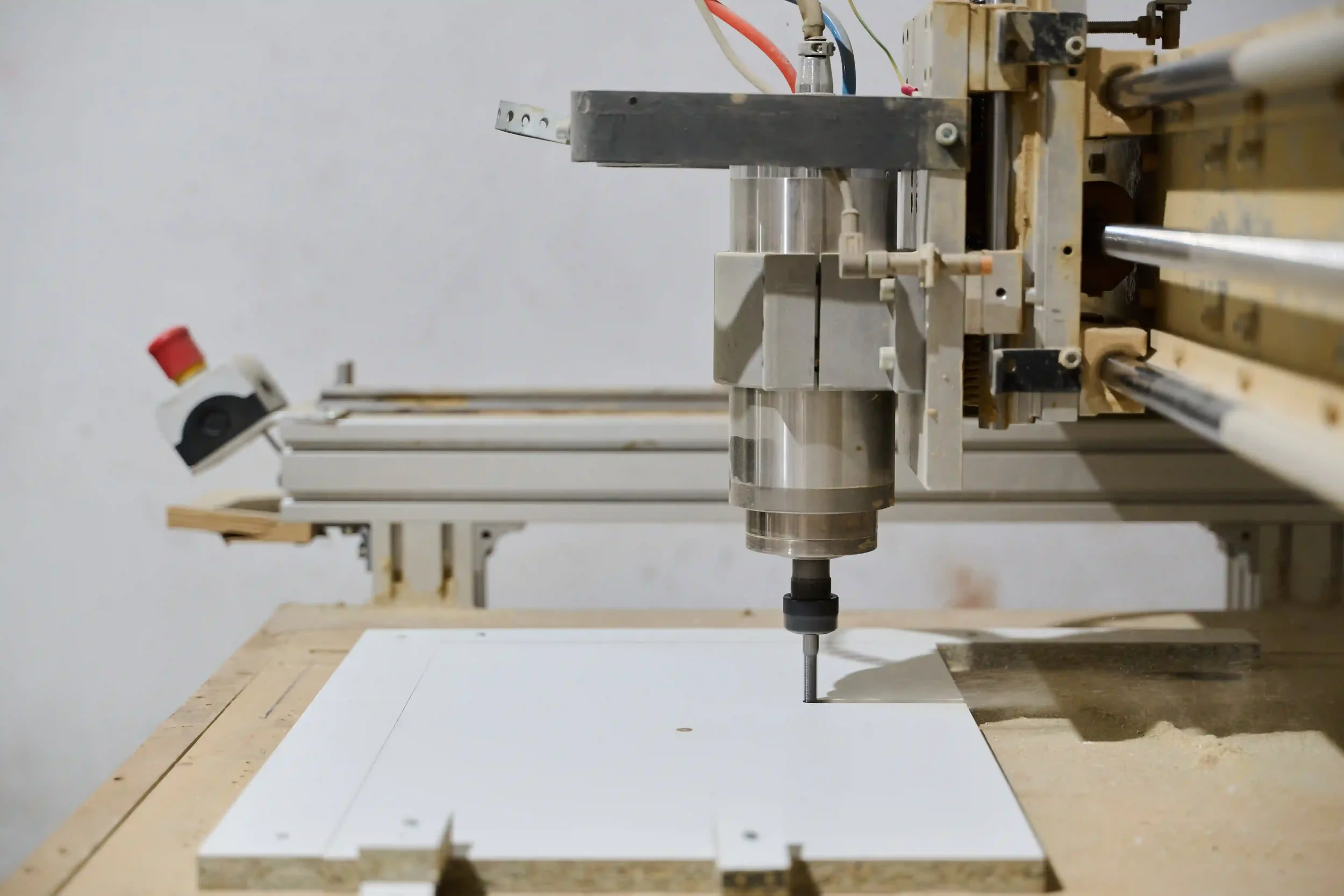
Accuracy shows how closely a CNC-machined component matches its specified dimensions, while precision describes how consistently that result is repeated. Both matter: components must match the original design and remain consistent across batches. File preparation, machine setup, tooling and quality checks help prevent assembly issues such as downtime or delays.
Components Don’t Fit Together
Even a small dimensional variation can prevent panels, joints, fittings or pre-drilled holes from aligning correctly. Accurate CNC machining helps each component match the approved design, allowing constituent parts to fit together as intended during assembly. This is particularly important for flat-pack furniture, modular products and joinery components, where several separately machined parts must connect without extensive manual adjustment.
Inconsistent Product Quality
Variations between components can cause misalignment, uneven edges and noticeable differences across finished products. These issues can make assembly more difficult and reduce customers’ confidence in the manufacturer’s quality standards.
Accurate, repeatable CNC machining follows the same programmed dimensions throughout a batch. This is combined with appropriate quality checks to ensure consistency.
Material Waste
Inaccurately machined parts may need to be adjusted, rejected or produced again, wasting both material and machining time. Errors can become particularly costly when they affect a larger production run. Careful programming, material optimisation and dimensional checks help identify problems early. Once the setup has been approved, accurate machining can contribute to less material waste.
Longer production Times
Components that do not meet the required dimensions can interrupt assembly and create additional work. Teams may need to modify parts manually, investigate the cause of the problem or wait for replacements before production can continue.
Advanced CNC machining reduces the need for corrective work by producing components to an agreed specification from the outset. Reliable repeatability also supports smoother batch production.
What Makes CNC Machining Accurate?
Several elements work cohesively to achieve accurate results:
CAD and CAM software: Digital designs are converted into precise instructions that guide each machining operation
Computer-controlled movement: The machine follows programmed cutting paths, reducing the variation associated with manual processes
Precision tooling: Correctly selected, sharp tools produce cleaner cuts and help components meet the required dimensions
Machine calibration: Regular calibration ensures the machine’s position and movement remain accurate
Quality control: Finished components are checked against the agreed drawings and specifications before completion
Are There Factors That Can Affect Accuracy?
A few common factors can affect accuracy, including material properties, worn tooling, incorrect machine setup and inadequate maintenance. Timber and sheet materials may also respond to moisture and temperature, causing slight dimensional changes.
These variables can be managed through appropriate material selection, maintained equipment, suitable tooling and regular quality checks. With the right controls in place, CNC machining remains a dependable option for repeatable production.
Is CNC Machining Accurate For Complex Projects?
Yes. CNC machinery can follow detailed programmed paths to produce complex shapes, cut-outs, grooves, recesses and drilling patterns accurately. The same controlled process also works effectively for simpler components.
Once the design and setup have been approved, components can be reproduced consistently across prototypes, bespoke orders and larger batches. This makes CNC machining suitable for complex furniture parts, detailed joinery and repeat production.
CNC vs Manual Cutting: Which is More Accurate?
CNC machining is generally more accurate than manual cutting because computer-controlled movements follow the same programmed instructions throughout production. This reduces variation caused by human error or fatigue.
| Feature | CNC Machining | Manual Cutting |
|---|---|---|
| Accuracy | Works to agreed dimensions and tolerances | Depends heavily on operator skill |
| Repeatability | Reproduces consistent components across a batch | Greater risk of variation between components |
| Complex designs | Produces detailed shapes, grooves and drilling patterns | Intricate features can be difficult to replicate |
| Production speed | Efficient for repeat and large-batch production | Often slower for multiple identical parts |
| Applications | Complex parts, prototypes and repeat batches | Simple cuts, adjustments and individual pieces |
Contact the CNC Experts at Cut to Size
From initial design support to accurate machining, finishing and delivery, Cut to Size provides a complete service tailored to your production requirements. Send us your drawings or CAD files to discuss your project and request a quotation. Get in touch with us. Call 01527 352306 or email info@cuttosize.co.
Related Posts